-
Array
(
[0] => Array
(
[id] => 1
[siteid] => 1
[parentid] => 0
[parentstr] => 0,
[infotype] => 0
[classname] => Home
[navname] => Home
[alias] =>
[english] =>
[linkurl] => /
[relinkurl] => index.html
[picurl] =>
[picwidth] =>
[picheight] =>
[colorval] =>
[boldval] =>
[seotitle] => Automotive Lamp suppliers,Led Headlight solutions,Luz Led Para Moto price,Headli
[keywords] => Automotive Lamp suppliers,Led Headlight solutions,
[description] => IV Auto Parts is a Automotive Lamp suppliers, provides Led Headlight solutions,Luz Led Para Moto price,Headlights For Car fittings.
[orderid] => 1
[isnav] => true
[checkinfo] => true
[url] => index.html
[child] => Array
(
)
)
[1] => Array
(
[id] => 2
[siteid] => 1
[parentid] => 0
[parentstr] => 0,
[infotype] => 0
[classname] => About Us
[navname] => About Us
[alias] =>
[english] => We Make Fence Idea
[linkurl] => about.php
[relinkurl] => about.html
[picurl] =>
[picwidth] =>
[picheight] =>
[colorval] =>
[boldval] =>
[seotitle] => Car Head Lamp Agencies,vehicle Headlamp Wholesale,car Head Lamp Price; IV Auto P
[keywords] => car head lamp agencies,vehicle headlamp wholesale,
[description] => IV Auto Parts, built in China and based in mainland China YiWu, has specialized 2
[isnav] => true
[checkinfo] => true
[url] => about.html
[child] => Array
(
[0] => Array
(
[id] => 10
[siteid] => 1
[parentid] => 2
[parentstr] => 0,2,
[infotype] => 0
[classname] => Our Culture
[navname] => Our Culture
[alias] =>
[english] =>
[linkurl] => about.php?cid=10
[relinkurl] => about-10-1.html
[picurl] =>
[picwidth] =>
[picheight] =>
[colorval] =>
[boldval] =>
[seotitle] =>
[keywords] =>
[description] =>
[orderid] => 10
[isnav] => true
[checkinfo] => true
[url] => about-10-1.html
[child] => Array
(
)
)
[1] => Array
(
[id] => 11
[siteid] => 1
[parentid] => 2
[parentstr] => 0,2,
[infotype] => 2
[classname] => Our Team
[navname] => Our Team
[alias] =>
[english] =>
[linkurl] => team.php
[relinkurl] => team.html
[picurl] =>
[picwidth] =>
[picheight] =>
[colorval] =>
[boldval] =>
[seotitle] =>
[keywords] =>
[description] =>
We have been supplying Replacement Headlight assembly,Side Light,Tail Lights,driving Lights,Led Fog,Interior Light,Light Accessories,since 2009, and thanks to the contribution of our professional team, customers across the world thumb up to IV Aut [orderid] => 11 [isnav] => true [checkinfo] => true [url] => team.html [child] => Array ( ) ) [2] => Array ( [id] => 12 [siteid] => 1 [parentid] => 2 [parentstr] => 0,2, [infotype] => 0 [classname] => Reference List [navname] => Reference List [alias] => [english] => [linkurl] => reference.php [relinkurl] => reference.html [picurl] => [picwidth] => [picheight] => [colorval] => [boldval] => [seotitle] => [keywords] => [description] => [orderid] => 12 [isnav] => true [checkinfo] => true [url] => reference.html [child] => Array ( ) ) ) ) [2] => Array ( [id] => 3 [siteid] => 1 [parentid] => 0 [parentstr] => 0, [infotype] => 2 [classname] => Warranty [navname] => Warranty [alias] => [english] => [linkurl] => warranty.php [relinkurl] => warranty.html [picurl] => [picwidth] => [picheight] => [colorval] => [boldval] => [seotitle] => Halogen Headlamps Solution,Motorcycle Headlamp Services,Upgrade Headlight Cost; [keywords] => Halogen Headlamps Solution,Motorcycle Headlamp Ser [description] => IV Auto Parts Provided For You Halogen Headlamps Solution,Motorcycle Headlamp Services,Upgrade Headlight Cost Calculate.
[orderid] => 3 [isnav] => true [checkinfo] => true [url] => warranty.html [child] => Array ( [0] => Array ( [id] => 13 [siteid] => 1 [parentid] => 3 [parentstr] => 0,3, [infotype] => 2 [classname] => CERTIFICATES [navname] => CERTIFICATES [alias] => [english] => [linkurl] => warranty.php?cid=13 [relinkurl] => warranty-13-1.html [picurl] => [picwidth] => [picheight] => [colorval] => [boldval] => [seotitle] => [keywords] => [description] => Your partner all the way
At IV Auto Parts we work as a complete supplier: We develop, produce and sell finishing systems and make sure the operators are fully instructed and able to run the Parts.
On top of tha [orderid] => 13 [isnav] => true [checkinfo] => true [url] => warranty-13-1.html [child] => Array ( ) ) [1] => Array ( [id] => 34 [siteid] => 1 [parentid] => 3 [parentstr] => 0,3, [infotype] => 0 [classname] => FAQ [navname] => FAQ [alias] => [english] => [linkurl] => FAQ.php [relinkurl] => FAQ.html [picurl] => [picwidth] => [picheight] => [colorval] => [boldval] => [seotitle] => [keywords] => [description] => [orderid] => 28 [isnav] => true [checkinfo] => true [url] => FAQ.html [child] => Array ( ) ) [2] => Array ( [id] => 33 [siteid] => 1 [parentid] => 3 [parentstr] => 0,3, [infotype] => 0 [classname] => Service & After Sales [navname] => Service & After Sale [alias] => [english] => [linkurl] => ServiceAndAfterSales.php [relinkurl] => ServiceAndAfterSales.html [picurl] => [picwidth] => [picheight] => [colorval] => [boldval] => [seotitle] => [keywords] => [description] => [orderid] => 29 [isnav] => true [checkinfo] => true [url] => ServiceAndAfterSales.html [child] => Array ( ) ) ) ) [3] => Array ( [id] => 4 [siteid] => 1 [parentid] => 0 [parentstr] => 0, [infotype] => 2 [classname] => Products [navname] => Products [alias] => Products List [english] => Explore Auto Parts Products [linkurl] => products.php [relinkurl] => products.html [picurl] => [picwidth] => [picheight] => [colorval] => [boldval] => [seotitle] => Headlamp Car For Sale,buy Headlamp,refit Headlight Cost, Head Lamp Fittings; IV [keywords] => IV Auto Parts Provide You With Details Refit Buy [description] => IV Auto Parts Provide You With Details Refit Buy Headlight Cost,head Lamp Fittings For Sale.
[orderid] => 4 [isnav] => true [checkinfo] => true [url] => products.html [child] => Array ( [0] => Array ( [id] => 24 [siteid] => 1 [parentid] => 4 [parentstr] => 0,4, [infotype] => 2 [classname] => Headlight assembly [navname] => Headlight assembly [alias] => Headlight assembly [english] => Headlight assembly [linkurl] => products-24-1.html [relinkurl] => products-24-1.html [picurl] => [picwidth] => [picheight] => [colorval] => [boldval] => [seotitle] => [keywords] => [description] => [orderid] => 22 [isnav] => true [checkinfo] => true [url] => products-24-1.html [child] => Array ( ) ) [1] => Array ( [id] => 29 [siteid] => 1 [parentid] => 4 [parentstr] => 0,4, [infotype] => 2 [classname] => Taillight Assembly [navname] => Taillight Assembly [alias] => Taillight Assembly [english] => Taillight Assembly [linkurl] => [relinkurl] => products-29-1.html [picurl] => [picwidth] => [picheight] => [colorval] => [boldval] => [seotitle] => Taillight Assembly [keywords] => Taillight Assembly,Tail Lights,Tail Lamp,Led Tail [description] => Taillight Assembly,Tail Lamp,Led Tail Lights For Audi [orderid] => 23 [isnav] => true [checkinfo] => true [url] => products-29-1.html [child] => Array ( ) ) [2] => Array ( [id] => 25 [siteid] => 1 [parentid] => 4 [parentstr] => 0,4, [infotype] => 2 [classname] => Turn Signal Light [navname] => Turn Signal Light [alias] => Turn Signal Light [english] => Turn Signal Light [linkurl] => products-25-1.php [relinkurl] => products-25-1.html [picurl] => [picwidth] => [picheight] => [colorval] => [boldval] => [seotitle] => [keywords] => Turn Signal Light,Side Blinker,Audi Turn Signal Li [description] => Audi Turn Signal Light [orderid] => 24 [isnav] => true [checkinfo] => true [url] => products-25-1.html [child] => Array ( ) ) [3] => Array ( [id] => 36 [siteid] => 1 [parentid] => 4 [parentstr] => 0,4, [infotype] => 2 [classname] => Alternator [navname] => Alternator [alias] => Alternator [english] => Alternator [linkurl] => products-36-1.php [relinkurl] => products-36-1.html [picurl] => [picwidth] => [picheight] => [colorval] => [boldval] => [seotitle] => Alternator For with Audi [keywords] => Alternator For with Audi [description] =>
Email:
sales@ivautoparts.com
Tel.: +86 13933893619


how to replace brake master repair kit?
2026-03-06
Summary:
Replacing a brake master cylinder with a repair kit is a complex and safety-critical job. While a master cylinder repair kit typically contains internal seals and springs, a complete job often involves related components. Below is a comprehensive guide th
Replacing a brake master cylinder with a repair kit is a complex and safety-critical job. While a master cylinder repair kit typically contains internal seals and springs, a complete job often involves related components. Below is a comprehensive guide that incorporates the specific repair kits you mentioned: the Rear Brake Caliper Repair Kit with Piston and Mechanism, the Brake & Camshaft Repair Kit, and the BRAKE SHOES REPAIR KITS.
DANGER: The braking system is vital to vehicle safety. Before commencing, ascertain that all spare parts are suitable for the specific make and model of your vehicle. This procedure is intended to be performed only by a skilled, qualified individual. Improper installation can lead to brake failure, causing serious injury or death .
Phase 1: Replacing the Brake Master Cylinder (Using its specific repair kit)
This phase involves overhauling the master cylinder itself. Note that a "repair kit" for a master cylinder usually replaces the internal piston seals and springs, not the outer housing.
Preparation: Use the brake fluid recommended by the manufacturer. Disconnect the negative battery cable. Raise and securely support the vehicle .
Fluid Removal: Remove as much brake fluid as possible from the master cylinder reservoir using a turkey baster or syringe.
Disconnection: Disconnect the fluid level sensor electrical connector. Loosen the brake tube fittings at the master cylinder using a flare nut wrench. Carefully pull the tubes away and plug the ends to prevent fluid loss and contamination .
Remove Master Cylinder: Remove the nuts or bolts securing the master cylinder to the brake booster or firewall. Carefully pull the cylinder forward and remove it. On some vehicles, you may need to disconnect the reservoir from the old cylinder for transfer .
Bench Bleeding (Critical Step): Before installation, the new or rebuilt master cylinder must be bled on a bench. Mount the cylinder in a vise, fill the reservoir with fluid, and use bleeder tubes or your fingers to block the outlet ports while depressing the piston with a blunt tool. Continue until no air bubbles emerge from the ports .
While the master cylinder is removed, it is an excellent time to service the calipers, especially if you have a repair kit for the rear mechanism.
Remove Caliper: Remove the wheel. Remove the caliper mounting bolts. Support the caliper so it does not hang by the brake hose .
Remove Piston: For rear calipers with a parking brake mechanism, the piston often needs to be rotated (wound) out, not pried. Use a suitable wind-back tool to turn the piston clockwise counter-clockwise to remove it from the housing. CAUTION: Do not use compressed air to remove the piston unless you are prepared to catch it, as the force is significant .
Replace Seals: Using a plastic pick, carefully remove the old sealing ring from the groove inside the cylinder bore. Clean the bore and piston with alcohol or methylated spirits and dry with compressed air .
Install New Mechanism:
Apply a thin coat of assembly lubricant (like ATE brake cylinder paste or the lubricant supplied in the kit) to the new piston, the sealing ring, and the cylinder bore .
Install the new sealing ring into the groove of the cylinder bore.
If your Rear Brake Caliper Repair Kit with Piston and Mechanism includes a new automatic adjuster or parking brake lever mechanism, ensure it is assembled correctly according to the kit instructions.
Carefully insert the piston. For rear pistons, you will likely need to turn it clockwise while pressing to engage the adjustment mechanism properly .
Install the new dust seal/protective cap, ensuring it seats perfectly .
Phase 3: Servicing Drum Brakes (Using BRAKE SHOES REPAIR KITS and the Brake & Camshaft Repair Kit)
If your vehicle has rear drum brakes, they will utilize BRAKE SHOES REPAIR KITS (containing shoes and springs) and potentially a Brake & Camshaft Repair Kit (containing seals and bushings for the brake actuating cam).
Remove Drum: Remove the wheel and brake drum. If the drum is stuck, you may need to retract the brake shoes by inserting a screwdriver through a hole in the drum or backing plate to push the adjuster lever or hold-off the parking brake lever .
Disassemble Shoes:
Use pliers to remove the brake shoe springs and retaining clips. Note the orientation of everything for reassembly .
Remove the brake shoes. Note how the parking brake cable attaches and disconnect it .
Remove the adjuster mechanism.
Replace Brake Shoes: Using your new BRAKE SHOES REPAIR KITS, install the new shoes. This often involves transferring the parking brake lever to the new shoe if not pre-installed. Hook up the parking brake cable .
Reassemble Hardware: Install the new springs and clips from the kit. Use the included adjuster or clean and reuse your old one if it is in good condition .
Service Camshaft (If applicable): If you have a Brake & Camshaft Repair Kit:
This usually applies to heavy-duty or some light-truck drum brake systems where the brake shoes are actuated by a camshaft.
Remove the old camshaft from the backing plate or spider.
Clean the shaft and the bore.
Install new O-rings or seals from the Brake & Camshaft Repair Kit onto the shaft. Lubricate them with brake assembly fluid or clean oil .
Reinstall the camshaft .
Phase 4: Reassembly and Final Bleeding
Reinstall Components: Reinstall the master cylinder (already bench bled), connect the brake lines, and torque to manufacturer specifications . Reinstall the calipers and secure the drums.
System Bleeding: This is the most critical final step. Starting with the wheel farthest from the master cylinder (usually the passenger side rear), have an assistant pump the brake pedal while you open and close the bleeder screw to expel air. Repeat for the remaining wheels. If you have a scan tool, you may need to cycle the ABS solenoids to bleed that portion of the system .
Final Checks: Check for any fluid leaks at all connections and bleeder screws. Check the brake fluid level. Reinstall the wheels, lower the vehicle, and torque the lug nuts .
Road Test: Perform a careful road test. Start at very low speeds to ensure firm pedal feel before testing at higher speeds
DANGER: The braking system is vital to vehicle safety. Before commencing, ascertain that all spare parts are suitable for the specific make and model of your vehicle. This procedure is intended to be performed only by a skilled, qualified individual. Improper installation can lead to brake failure, causing serious injury or death .
Phase 1: Replacing the Brake Master Cylinder (Using its specific repair kit)
This phase involves overhauling the master cylinder itself. Note that a "repair kit" for a master cylinder usually replaces the internal piston seals and springs, not the outer housing.
Preparation: Use the brake fluid recommended by the manufacturer. Disconnect the negative battery cable. Raise and securely support the vehicle .
Fluid Removal: Remove as much brake fluid as possible from the master cylinder reservoir using a turkey baster or syringe.
Disconnection: Disconnect the fluid level sensor electrical connector. Loosen the brake tube fittings at the master cylinder using a flare nut wrench. Carefully pull the tubes away and plug the ends to prevent fluid loss and contamination .
Remove Master Cylinder: Remove the nuts or bolts securing the master cylinder to the brake booster or firewall. Carefully pull the cylinder forward and remove it. On some vehicles, you may need to disconnect the reservoir from the old cylinder for transfer .
Bench Bleeding (Critical Step): Before installation, the new or rebuilt master cylinder must be bled on a bench. Mount the cylinder in a vise, fill the reservoir with fluid, and use bleeder tubes or your fingers to block the outlet ports while depressing the piston with a blunt tool. Continue until no air bubbles emerge from the ports .
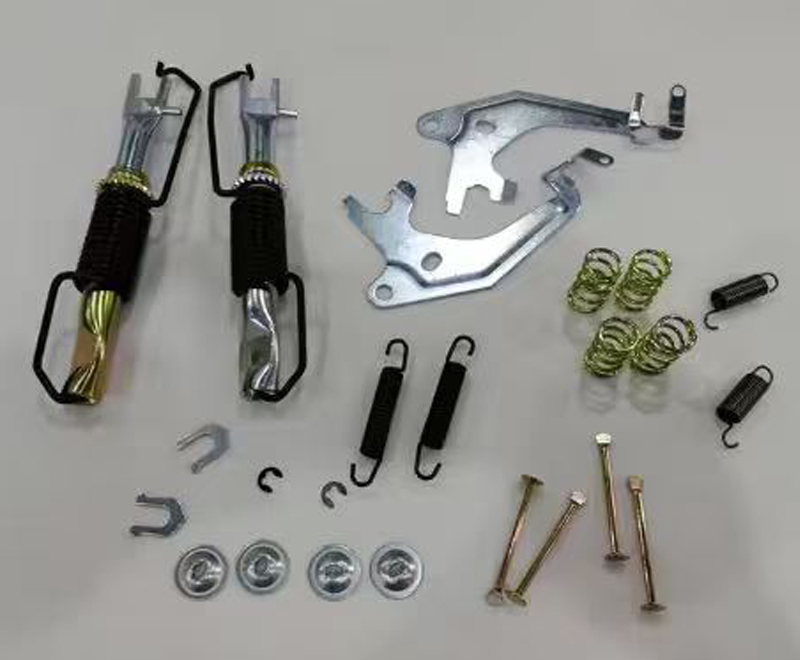
While the master cylinder is removed, it is an excellent time to service the calipers, especially if you have a repair kit for the rear mechanism.
Remove Caliper: Remove the wheel. Remove the caliper mounting bolts. Support the caliper so it does not hang by the brake hose .
Remove Piston: For rear calipers with a parking brake mechanism, the piston often needs to be rotated (wound) out, not pried. Use a suitable wind-back tool to turn the piston clockwise counter-clockwise to remove it from the housing. CAUTION: Do not use compressed air to remove the piston unless you are prepared to catch it, as the force is significant .
Replace Seals: Using a plastic pick, carefully remove the old sealing ring from the groove inside the cylinder bore. Clean the bore and piston with alcohol or methylated spirits and dry with compressed air .
Install New Mechanism:
Apply a thin coat of assembly lubricant (like ATE brake cylinder paste or the lubricant supplied in the kit) to the new piston, the sealing ring, and the cylinder bore .
Install the new sealing ring into the groove of the cylinder bore.
If your Rear Brake Caliper Repair Kit with Piston and Mechanism includes a new automatic adjuster or parking brake lever mechanism, ensure it is assembled correctly according to the kit instructions.
Carefully insert the piston. For rear pistons, you will likely need to turn it clockwise while pressing to engage the adjustment mechanism properly .
Install the new dust seal/protective cap, ensuring it seats perfectly .
Phase 3: Servicing Drum Brakes (Using BRAKE SHOES REPAIR KITS and the Brake & Camshaft Repair Kit)
If your vehicle has rear drum brakes, they will utilize BRAKE SHOES REPAIR KITS (containing shoes and springs) and potentially a Brake & Camshaft Repair Kit (containing seals and bushings for the brake actuating cam).
Remove Drum: Remove the wheel and brake drum. If the drum is stuck, you may need to retract the brake shoes by inserting a screwdriver through a hole in the drum or backing plate to push the adjuster lever or hold-off the parking brake lever .
Disassemble Shoes:
Use pliers to remove the brake shoe springs and retaining clips. Note the orientation of everything for reassembly .
Remove the brake shoes. Note how the parking brake cable attaches and disconnect it .
Remove the adjuster mechanism.
Replace Brake Shoes: Using your new BRAKE SHOES REPAIR KITS, install the new shoes. This often involves transferring the parking brake lever to the new shoe if not pre-installed. Hook up the parking brake cable .
Reassemble Hardware: Install the new springs and clips from the kit. Use the included adjuster or clean and reuse your old one if it is in good condition .
Service Camshaft (If applicable): If you have a Brake & Camshaft Repair Kit:
This usually applies to heavy-duty or some light-truck drum brake systems where the brake shoes are actuated by a camshaft.
Remove the old camshaft from the backing plate or spider.
Clean the shaft and the bore.
Install new O-rings or seals from the Brake & Camshaft Repair Kit onto the shaft. Lubricate them with brake assembly fluid or clean oil .
Reinstall the camshaft .
Phase 4: Reassembly and Final Bleeding
Reinstall Components: Reinstall the master cylinder (already bench bled), connect the brake lines, and torque to manufacturer specifications . Reinstall the calipers and secure the drums.
System Bleeding: This is the most critical final step. Starting with the wheel farthest from the master cylinder (usually the passenger side rear), have an assistant pump the brake pedal while you open and close the bleeder screw to expel air. Repeat for the remaining wheels. If you have a scan tool, you may need to cycle the ABS solenoids to bleed that portion of the system .
Final Checks: Check for any fluid leaks at all connections and bleeder screws. Check the brake fluid level. Reinstall the wheels, lower the vehicle, and torque the lug nuts .
Road Test: Perform a careful road test. Start at very low speeds to ensure firm pedal feel before testing at higher speeds