-
Array
(
[0] => Array
(
[id] => 1
[siteid] => 1
[parentid] => 0
[parentstr] => 0,
[infotype] => 0
[classname] => Home
[navname] => Home
[alias] =>
[english] =>
[linkurl] => /
[relinkurl] => index.html
[picurl] =>
[picwidth] =>
[picheight] =>
[colorval] =>
[boldval] =>
[seotitle] => Automotive Lamp suppliers,Led Headlight solutions,Luz Led Para Moto price,Headli
[keywords] => Automotive Lamp suppliers,Led Headlight solutions,
[description] => IV Auto Parts is a Automotive Lamp suppliers, provides Led Headlight solutions,Luz Led Para Moto price,Headlights For Car fittings.
[orderid] => 1
[isnav] => true
[checkinfo] => true
[url] => index.html
[child] => Array
(
)
)
[1] => Array
(
[id] => 2
[siteid] => 1
[parentid] => 0
[parentstr] => 0,
[infotype] => 0
[classname] => About Us
[navname] => About Us
[alias] =>
[english] => We Make Fence Idea
[linkurl] => about.php
[relinkurl] => about.html
[picurl] =>
[picwidth] =>
[picheight] =>
[colorval] =>
[boldval] =>
[seotitle] => Car Head Lamp Agencies,vehicle Headlamp Wholesale,car Head Lamp Price; IV Auto P
[keywords] => car head lamp agencies,vehicle headlamp wholesale,
[description] => IV Auto Parts, built in China and based in mainland China YiWu, has specialized 2
[isnav] => true
[checkinfo] => true
[url] => about.html
[child] => Array
(
[0] => Array
(
[id] => 10
[siteid] => 1
[parentid] => 2
[parentstr] => 0,2,
[infotype] => 0
[classname] => Our Culture
[navname] => Our Culture
[alias] =>
[english] =>
[linkurl] => about.php?cid=10
[relinkurl] => about-10-1.html
[picurl] =>
[picwidth] =>
[picheight] =>
[colorval] =>
[boldval] =>
[seotitle] =>
[keywords] =>
[description] =>
[orderid] => 10
[isnav] => true
[checkinfo] => true
[url] => about-10-1.html
[child] => Array
(
)
)
[1] => Array
(
[id] => 11
[siteid] => 1
[parentid] => 2
[parentstr] => 0,2,
[infotype] => 2
[classname] => Our Team
[navname] => Our Team
[alias] =>
[english] =>
[linkurl] => team.php
[relinkurl] => team.html
[picurl] =>
[picwidth] =>
[picheight] =>
[colorval] =>
[boldval] =>
[seotitle] =>
[keywords] =>
[description] =>
We have been supplying Replacement Headlight assembly,Side Light,Tail Lights,driving Lights,Led Fog,Interior Light,Light Accessories,since 2009, and thanks to the contribution of our professional team, customers across the world thumb up to IV Aut [orderid] => 11 [isnav] => true [checkinfo] => true [url] => team.html [child] => Array ( ) ) [2] => Array ( [id] => 12 [siteid] => 1 [parentid] => 2 [parentstr] => 0,2, [infotype] => 0 [classname] => Reference List [navname] => Reference List [alias] => [english] => [linkurl] => reference.php [relinkurl] => reference.html [picurl] => [picwidth] => [picheight] => [colorval] => [boldval] => [seotitle] => [keywords] => [description] => [orderid] => 12 [isnav] => true [checkinfo] => true [url] => reference.html [child] => Array ( ) ) ) ) [2] => Array ( [id] => 3 [siteid] => 1 [parentid] => 0 [parentstr] => 0, [infotype] => 2 [classname] => Warranty [navname] => Warranty [alias] => [english] => [linkurl] => warranty.php [relinkurl] => warranty.html [picurl] => [picwidth] => [picheight] => [colorval] => [boldval] => [seotitle] => Halogen Headlamps Solution,Motorcycle Headlamp Services,Upgrade Headlight Cost; [keywords] => Halogen Headlamps Solution,Motorcycle Headlamp Ser [description] => IV Auto Parts Provided For You Halogen Headlamps Solution,Motorcycle Headlamp Services,Upgrade Headlight Cost Calculate.
[orderid] => 3 [isnav] => true [checkinfo] => true [url] => warranty.html [child] => Array ( [0] => Array ( [id] => 13 [siteid] => 1 [parentid] => 3 [parentstr] => 0,3, [infotype] => 2 [classname] => CERTIFICATES [navname] => CERTIFICATES [alias] => [english] => [linkurl] => warranty.php?cid=13 [relinkurl] => warranty-13-1.html [picurl] => [picwidth] => [picheight] => [colorval] => [boldval] => [seotitle] => [keywords] => [description] => Your partner all the way
At IV Auto Parts we work as a complete supplier: We develop, produce and sell finishing systems and make sure the operators are fully instructed and able to run the Parts.
On top of tha [orderid] => 13 [isnav] => true [checkinfo] => true [url] => warranty-13-1.html [child] => Array ( ) ) [1] => Array ( [id] => 34 [siteid] => 1 [parentid] => 3 [parentstr] => 0,3, [infotype] => 0 [classname] => FAQ [navname] => FAQ [alias] => [english] => [linkurl] => FAQ.php [relinkurl] => FAQ.html [picurl] => [picwidth] => [picheight] => [colorval] => [boldval] => [seotitle] => [keywords] => [description] => [orderid] => 28 [isnav] => true [checkinfo] => true [url] => FAQ.html [child] => Array ( ) ) [2] => Array ( [id] => 33 [siteid] => 1 [parentid] => 3 [parentstr] => 0,3, [infotype] => 0 [classname] => Service & After Sales [navname] => Service & After Sale [alias] => [english] => [linkurl] => ServiceAndAfterSales.php [relinkurl] => ServiceAndAfterSales.html [picurl] => [picwidth] => [picheight] => [colorval] => [boldval] => [seotitle] => [keywords] => [description] => [orderid] => 29 [isnav] => true [checkinfo] => true [url] => ServiceAndAfterSales.html [child] => Array ( ) ) ) ) [3] => Array ( [id] => 4 [siteid] => 1 [parentid] => 0 [parentstr] => 0, [infotype] => 2 [classname] => Products [navname] => Products [alias] => Products List [english] => Explore Auto Parts Products [linkurl] => products.php [relinkurl] => products.html [picurl] => [picwidth] => [picheight] => [colorval] => [boldval] => [seotitle] => Headlamp Car For Sale,buy Headlamp,refit Headlight Cost, Head Lamp Fittings; IV [keywords] => IV Auto Parts Provide You With Details Refit Buy [description] => IV Auto Parts Provide You With Details Refit Buy Headlight Cost,head Lamp Fittings For Sale.
[orderid] => 4 [isnav] => true [checkinfo] => true [url] => products.html [child] => Array ( [0] => Array ( [id] => 24 [siteid] => 1 [parentid] => 4 [parentstr] => 0,4, [infotype] => 2 [classname] => Headlight assembly [navname] => Headlight assembly [alias] => Headlight assembly [english] => Headlight assembly [linkurl] => products-24-1.html [relinkurl] => products-24-1.html [picurl] => [picwidth] => [picheight] => [colorval] => [boldval] => [seotitle] => [keywords] => [description] => [orderid] => 22 [isnav] => true [checkinfo] => true [url] => products-24-1.html [child] => Array ( ) ) [1] => Array ( [id] => 29 [siteid] => 1 [parentid] => 4 [parentstr] => 0,4, [infotype] => 2 [classname] => Taillight Assembly [navname] => Taillight Assembly [alias] => Taillight Assembly [english] => Taillight Assembly [linkurl] => [relinkurl] => products-29-1.html [picurl] => [picwidth] => [picheight] => [colorval] => [boldval] => [seotitle] => Taillight Assembly [keywords] => Taillight Assembly,Tail Lights,Tail Lamp,Led Tail [description] => Taillight Assembly,Tail Lamp,Led Tail Lights For Audi [orderid] => 23 [isnav] => true [checkinfo] => true [url] => products-29-1.html [child] => Array ( ) ) [2] => Array ( [id] => 25 [siteid] => 1 [parentid] => 4 [parentstr] => 0,4, [infotype] => 2 [classname] => Turn Signal Light [navname] => Turn Signal Light [alias] => Turn Signal Light [english] => Turn Signal Light [linkurl] => products-25-1.php [relinkurl] => products-25-1.html [picurl] => [picwidth] => [picheight] => [colorval] => [boldval] => [seotitle] => [keywords] => Turn Signal Light,Side Blinker,Audi Turn Signal Li [description] => Audi Turn Signal Light [orderid] => 24 [isnav] => true [checkinfo] => true [url] => products-25-1.html [child] => Array ( ) ) [3] => Array ( [id] => 36 [siteid] => 1 [parentid] => 4 [parentstr] => 0,4, [infotype] => 2 [classname] => Alternator [navname] => Alternator [alias] => Alternator [english] => Alternator [linkurl] => products-36-1.php [relinkurl] => products-36-1.html [picurl] => [picwidth] => [picheight] => [colorval] => [boldval] => [seotitle] => Alternator For with Audi [keywords] => Alternator For with Audi [description] =>
Email:
sales@ivautoparts.com
Tel.: +86 13933893619


How hard is it to replace headlight assembly?
2026-01-15
Summary:
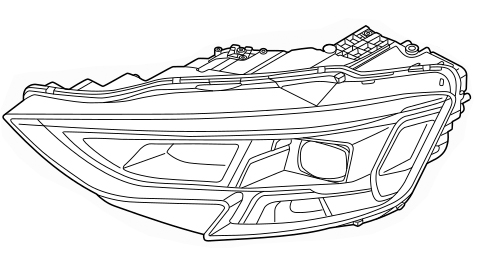
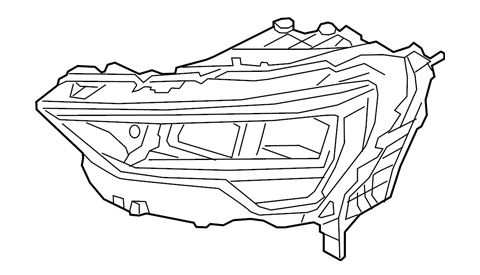
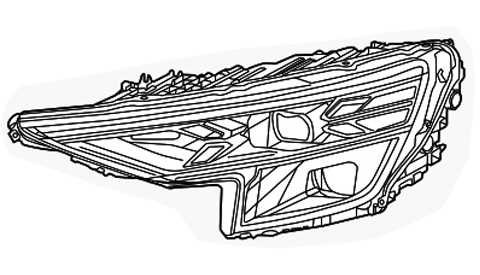
Replacing a headlight assembly is not a one-size-fits-all task. The difficulty varies greatly, from a straightforward job on some cars to a complex, multi-hour project on others. The specific design of your vehicle is the most important factor.
Replacing a headlight assembly is not a one-size-fits-all task. The difficulty varies greatly, from a straightforward job on some cars to a complex, multi-hour project on others. The specific design of your vehicle is the most important factor.
Key Factors Influencing the Difficulty
Here’s what makes replacing a headlight assembly easier or harder:
Vehicle Make, Model, and Year : This is the biggest factor. Some cars are designed for easier access. For example, for a 2008 Chevrolet Malibu, you reportedly need to remove the front wheel and fender liner just to reach the headlight. Modern cars with complex bumper and panel designs are generally more difficult.
Headlight Technology (Halogen vs. LED) : This affects both the replacement process and the headlight spare parts you need.
Halogen Headlights : The assembly is often just a housing for a replaceable bulb. Swapping the entire unit is typically more about physical installation.
Modern LED Headlights : These are more integrated. The LED module or ballast is often a separate, expensive component. When you buy a new assembly, it may not include these parts. You must carefully transfer them from the old unit, and the new module may require programming with specialized software to work.
Access and Mounting : Many modern vehicles require partial removal of the front bumper, grille, or inner fender panels to access the headlight mounting bolts. Motorcycles may have specific multi-point adjustment mechanisms for precise aiming.
Finding the Correct Headlight Spare Parts
Finding the right part is crucial for a successful replacement. Here are common types of headlight spare parts available:
| Part Type | Description | Common Source & Example |
Complete OEM Assembly | The exact part from the vehicle manufacturer. Ensures perfect fit and function, but is often the most expensive option. | Dealer parts departments. |
Aftermarket Replacement | A new unit made by a third-party company to match OEM specs. A cost-effective alternative that should fit correctly. | Auto parts stores, online retailers (e.g., TYC brand for Honda sport headlights ). |
Used/OEM Take-off | A genuine part from a salvaged vehicle. Can be a good value but condition varies. | Online marketplaces, salvage yards. |
Sport/Stylized Headlights | Aftermarket assemblies that change the look of the vehicle, often with black housings or LED accents. Popular for models like the Range Rover Sport or VW Golf. | Specialized automotive websites, online retailers. |
When shopping, you must know your vehicle's exact year, make, model, and trim level. An assembly for a base model might differ from one for a Sport trim.
While procedures vary, here is a common workflow:
1.Disconnect the Battery : Always start by disconnecting the negative terminal for safety.
2.Gain Access : Remove any necessary components blocking the headlight (e.g., grille, bumper cover, inner fender liners).
3.Remove the Old Assembly : Unplug the electrical connectors and remove the mounting bolts (often 2-4 bolts). Carefully pull the assembly out.
4.Transfer Components (if needed) : For LED units, detach the control modules/ballasts from the old housing and install them on the new one.
5.Install the New Assembly : Plug in the connectors, position the assembly, and secure all mounting bolts.
6.Reassemble and Test : Put all removed panels back. Reconnect the battery. Test all lighting functions (low beam, high beam, turn signal, daytime running lights).
7.Aim the Headlights : This is a critical safety step. Follow your vehicle's manual to adjust the beams correctly against a wall. Some luxury or LED systems may require electronic calibration with a dealer scan tool.
If your vehicle requires significant disassembly or involves LED modules that need programming, the job can be challenging for a beginner. Consulting a vehicle-specific repair manual or forum before starting is highly recommended.
I hope this gives you a clear picture. To provide more specific guidance, could you tell me the make, model, and year of your vehicle ?
Key Factors Influencing the Difficulty
Here’s what makes replacing a headlight assembly easier or harder:
Vehicle Make, Model, and Year : This is the biggest factor. Some cars are designed for easier access. For example, for a 2008 Chevrolet Malibu, you reportedly need to remove the front wheel and fender liner just to reach the headlight. Modern cars with complex bumper and panel designs are generally more difficult.
Headlight Technology (Halogen vs. LED) : This affects both the replacement process and the headlight spare parts you need.
Halogen Headlights : The assembly is often just a housing for a replaceable bulb. Swapping the entire unit is typically more about physical installation.
Modern LED Headlights : These are more integrated. The LED module or ballast is often a separate, expensive component. When you buy a new assembly, it may not include these parts. You must carefully transfer them from the old unit, and the new module may require programming with specialized software to work.
Access and Mounting : Many modern vehicles require partial removal of the front bumper, grille, or inner fender panels to access the headlight mounting bolts. Motorcycles may have specific multi-point adjustment mechanisms for precise aiming.
Finding the Correct Headlight Spare Parts
Finding the right part is crucial for a successful replacement. Here are common types of headlight spare parts available:
| Part Type | Description | Common Source & Example |
Complete OEM Assembly | The exact part from the vehicle manufacturer. Ensures perfect fit and function, but is often the most expensive option. | Dealer parts departments. |
Aftermarket Replacement | A new unit made by a third-party company to match OEM specs. A cost-effective alternative that should fit correctly. | Auto parts stores, online retailers (e.g., TYC brand for Honda sport headlights ). |
Used/OEM Take-off | A genuine part from a salvaged vehicle. Can be a good value but condition varies. | Online marketplaces, salvage yards. |
Sport/Stylized Headlights | Aftermarket assemblies that change the look of the vehicle, often with black housings or LED accents. Popular for models like the Range Rover Sport or VW Golf. | Specialized automotive websites, online retailers. |
When shopping, you must know your vehicle's exact year, make, model, and trim level. An assembly for a base model might differ from one for a Sport trim.
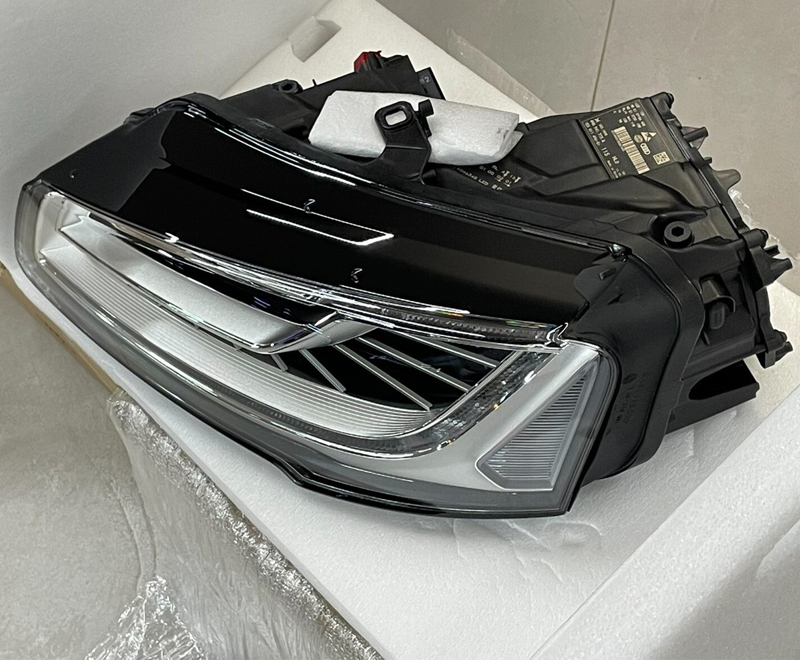
While procedures vary, here is a common workflow:
1.Disconnect the Battery : Always start by disconnecting the negative terminal for safety.
2.Gain Access : Remove any necessary components blocking the headlight (e.g., grille, bumper cover, inner fender liners).
3.Remove the Old Assembly : Unplug the electrical connectors and remove the mounting bolts (often 2-4 bolts). Carefully pull the assembly out.
4.Transfer Components (if needed) : For LED units, detach the control modules/ballasts from the old housing and install them on the new one.
5.Install the New Assembly : Plug in the connectors, position the assembly, and secure all mounting bolts.
6.Reassemble and Test : Put all removed panels back. Reconnect the battery. Test all lighting functions (low beam, high beam, turn signal, daytime running lights).
7.Aim the Headlights : This is a critical safety step. Follow your vehicle's manual to adjust the beams correctly against a wall. Some luxury or LED systems may require electronic calibration with a dealer scan tool.
If your vehicle requires significant disassembly or involves LED modules that need programming, the job can be challenging for a beginner. Consulting a vehicle-specific repair manual or forum before starting is highly recommended.
I hope this gives you a clear picture. To provide more specific guidance, could you tell me the make, model, and year of your vehicle ?